




MAX BLONDAT & MANUFACTURE NATIONALE DE SÈVRES
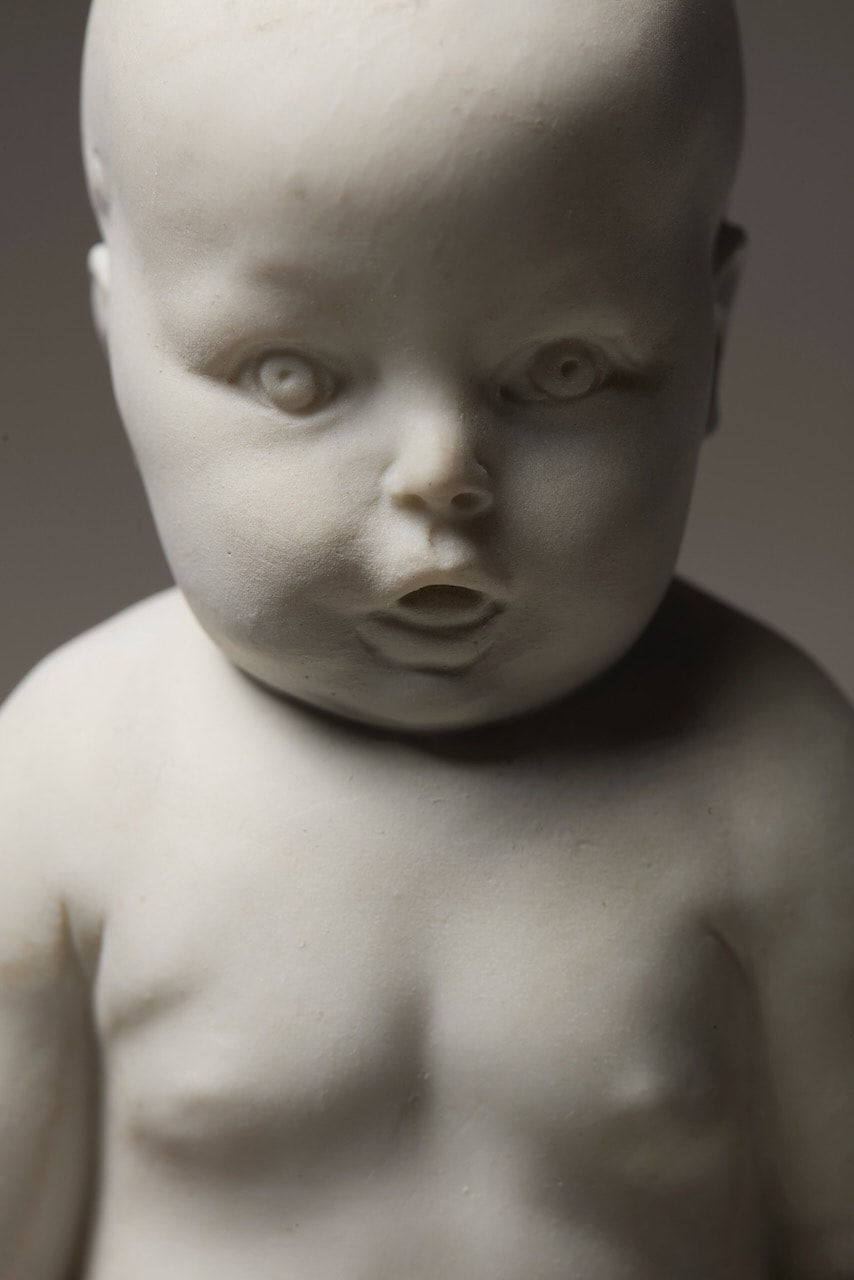
On the occasion of the 1925 International Exhibition of Decorative Arts in Paris, sculptor Max Blondat erected a fountain in front of the Collector's Pavilion, decorated by Jacques-Émile Ruhlmann. Made of white porcelain, this work is the latest edition of the miniature model marketed by the Sèvres factory.
D 18 1/2 - H 21 1/4 in.
Further images
-
(View a larger image of thumbnail 1
)

-
(View a larger image of thumbnail 2
)

-
(View a larger image of thumbnail 3
)

-
(View a larger image of thumbnail 4
)

-
(View a larger image of thumbnail 5
)

-
(View a larger image of thumbnail 6
)

-
(View a larger image of thumbnail 7
)

-
(View a larger image of thumbnail 8
)

-
(View a larger image of thumbnail 9
)


The work in question is one of the most refined embodiments of the aesthetic ideology of Max Blondat, a Burgundian sculptor whose career is closely linked to the dawn of Art Deco. His creation, significantly entitled L’Équilibre(“Balance”), was originally conceived to decorate the Hôtel du Collectionneur on the occasion of the Exposition Internationale des Arts Décoratifs et Industriels Modernes held in Paris in 1925.
In the version produced by the Manufacture Nationale de Sèvres, the work becomes a sumptuous centerpiece, harmoniously combining sculptural language and ornamental function with effortless grace. The composition revolves around the figure of a nude child, a paradigm of innocence and timeless grace, standing upon a sphere — a universal symbol of perfection and harmony. This delicate balance is in turn supported by a fluted column recalling classical architecture, lending the ensemble an air of solemnity tempered by the childlike softness of the figure. The column evokes a fountain as it extends into a circular basin whose outer walls are carved with acorns and festoons.
Max Blondat was an Art Nouveau and Art Deco sculptor trained at the École Germain-Pilon in Paris. In 1890, he exhibited a plaster medallion at the Salon des Artistes Français. He subsequently refined his technique in the studio of Mathurin Moreau. In 1892, he entered the École des Beaux-Arts in Paris and signed his earliest works with his mother’s name, Henry. He also produced ceramics with Edmond Lachenal at the Sèvres manufactory and wrought-iron works with Edgar Brandt. He collaborated with the Siot-Decauville and Valsuani foundries, and created jewelry for Chambon and Hermès. In 1906, he became a founding member of the Société Française des Arts Décoratifs. A number of his works are now held in the Musée des Années Trente in Boulogne-Billancourt. One of his most celebrated creations is the Fontaine de la Jeunesse, depicting three children gazing at three frogs.
Literature
- “Exposition Internationale des Arts Décoratifs et Industriels Modernes,” L’Art Vivant, 1925, no. 19, p. 24.
- “Exposition Internationale des Arts Décoratifs et Industriels Modernes,” Art et Décoration, 1925, no. 6, p. 207.
- Patout, Pierre, Official Architecture and the Pavilions, Paris, Éditions Charles Moreau, 1925, pl. 19 (original model reproduced in situ).
- Vaillat, Léandre, The Sculptures of Max Blondat, exhibition catalogue, Musée Galliera, Paris, Éditions du Musée Galliera, 1926, no. 7 (identical model illustrated).
- La Sculpture. The Works of the Manufacture de Sèvres, Paris, 1932, model referenced under no. 1229 and reproduced in pl. 43.
- Foucart, Bruno; Fleury, Alice, The Sculptures of Max Blondat (1872–1925): From Modern Style to Art Deco, exhibition catalogue, Musée départemental de l’Oise, Beauvais, Éditions du Musée départemental de l’Oise, 1979, no. 43 bis (identical model illustrated).
- Wold, Norbert, Art Deco, Munich, Prestel, 2016, p. 71.
WELCOME TO GALERIE MARCILHAC NEWSLETTER
Please Join our mailing list by filling the form below
* denotes required fields
We will process the personal data you have supplied in accordance with our privacy policy (available on request). You can unsubscribe or change your preferences at any time by clicking the link in our emails.